
External Blinds Fabric Guide
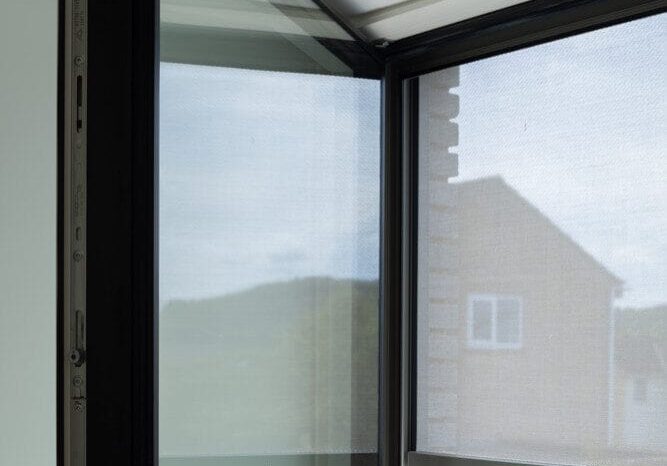
When looking at external blinds’ fabric, architects consider the design and colours of the building alongside the client’s personal preferences and budget.
However, architects will also need to consider the ‘openness’ of the weave and visibility.
What do we mean by openness?
Openness refers to the weave of the fibres of our outdoor fibreglass screen fabric and how much light it allows into the building while absorbing and reflecting most of the heat.
All the fabrics come in different measurements of openness, which refer to the percentage of holes in the screen, and therefore outward visibility and how much light comes in.
They come in 5 per cent, 3 per cent, 1 per cent, and 0 per cent ‘openness’. 5 per cent means that the holes cover 5% of the screen; 3% means only 3% of the screen, and so on down - our 0 per cent fabric is essentially a blackout.
The most popular fabric with architects and homeowners is our 5 per cent screen because it allows natural light into the building and occupants to enjoy the view outside.
So, will a tighter weave screen offer greater heat reduction?
No, the openness of a screen makes no difference to heat reduction.
Therefore, a 5 per cent screen offers as much heat protection as a blackout screen, with the benefit of extra visibility so occupants can still see outside while providing privacy.
What colours are better at reducing heat?
Lighter coloured fabrics do reduce heat more effectively than darker fabrics, but the difference is only marginal.
However, darker fabrics allow for greater visibility outside, an important factor when choosing the fabric, as most people will want to be able to watch the world outside when the blinds are closed.
As the difference in heat is negligible between dark and light fabrics, most people choose darker colours because of these visibility advantages.
How much heat can external blinds reduce?
External blinds’ special fibreglass fibre weave can block up to 90 per cent of the sun’s heat by absorbing and reflecting back the infrared rays before they can travel through the glass, maintaining a comfortable inside temperature.
Loughborough University researchers, working on behalf of the British Blinds & Shutter Organisation (BBSA), showed external blinds reduced internal temperatures in a house by over 40 per cent when compared to zero screening on an identical home.
What are G-values when talking about solar glare?
A G-value is a measure of the amount of solar gain that comes through a window and is short for Solar Heat Gain Coefficient (SHGC).
It is calculated from the direct energy transmitted through the glass plus the energy absorbed by the material and radiated internally into an enclosed space. So, a value of 0 means all solar energy is blocked, and 1 means 100 per cent of the sun’s energy goes through the material.
Using the G-value, external blinds measure 0.2 or less, outperforming other solar shading options such as solar glass, which generally achieves 0.3 or 0.4-0.5 for triple glazing and 0.6-0.7 for double glazing.
What does this translate to in degrees Celsius?
Installing external blinds on a building sees an average drop in temperature of up to five degrees Celsius, the difference between comfortable and stifling.
However, our case studies show far higher temperature drops of up to seven degrees Celsius or more when external blinds are fitted.
What colours and fabrics are available?
Our wide range of fabrics is made by well-known European manufacturers, including Serge Ferrari, Mermet and Copaco, and they come in a huge variety of colours to suit any project.
For more details, download Renson’s external blinds fabric and Sunscreen Classic.
Fabric options are only limited when it comes to budget-friendly external blinds like Renson’s Fixscreen Go, which comes in just one fabric choice and is limited to seven colours.
Talk to the experts
External blinds have been around for many years but are only just beginning to gain traction in the UK. We have many years’ experience of advising architects, interior designers and homeowners on their projects.
If you need any help in choosing the right fabric and colour for your project, then contact us, and we can talk you through the options.
External Blind Fabric FAQs
Related Content

Garden Room, Veranda, Pergola or Awning: What’s Actually the Difference?

How does the temperature of your home affect wellbeing?
