
What Are The Home Wellbeing Trends For 2026?

It’s no big secret that home wellbeing trends often go out of fashion after a few years.
But with our changing climate and a shift in how we use our homes, 2026 could be the year when we see trends emerging that will stay with us long into the future.
With almost half of us working from home, this year’s emphasis is on creating a comfortable physical environment with innovations once the preserve of the luxury market, now becoming more widespread.
Perfect temperature with External Blinds
Last year was the warmest year on record, according to the Met Office, with the UK experiencing four heatwaves when the mercury hit 35.8°C.
Modern homes are super-insulated which is great in winter, but make it difficult for heat to escape during the summer, especially if you have south or south-west facing windows.
In fact, it’s estimated that 80 per cent of British homes overheat in heatwaves, causing all sorts of health problems for residents including broken sleep and loss of concentration during the day to more serious heat stroke and heat exhaustion.
Why the growth of External Blinds?
This is why external blinds, fitted to the outside of the window, are set to become more widespread in the UK this year.
Independent monitoring commissioned by the British Blind & Shutter Association on London flats found that unshaded rooms reached up to 47.5 °C on a summer day, while external blinds cut operative temperatures by 10–18 °C (with shaded flats peaking around 28 °C); internal blinds achieved 8–13 °C reductions, and homes with no shading overheated the most.
UK Parliamentary written evidence submitted by the BBSA also confirms that external shading is more effective than internal shading, blocking up to 98% of solar gain at the façade.
Outdoor blinds are widely recognised by architects as one of the most effective solutions to halt overheating, the special reflective material stopping 95 per cent of the sun’s rays from entering a window, keeping your home cool throughout the day and night.
Bringing the outside in
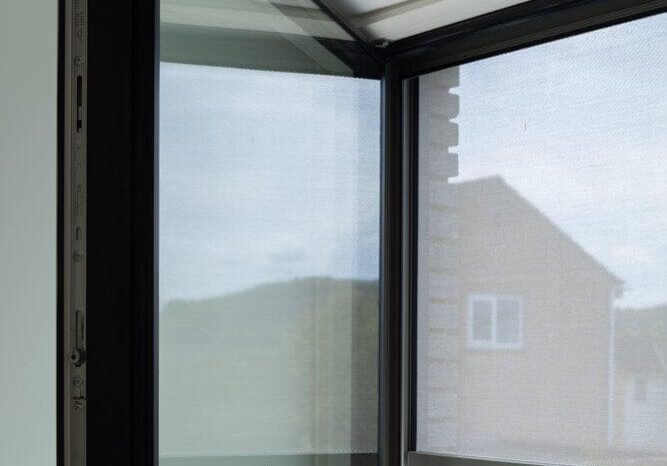
The great bonus with external blinds is that their open weave allows plenty of light to come into the home and residents to see the world outside, aligning with another of 2026’s trends - biophilic design.
At its core, biophilic design is about bringing the outside in – daylight, views of greenery; using natural materials in the home, indoor planting and a seamless transition between indoors and outdoors. These strategies are linked to lower stress, better mood and improved cognitive function.
You can incorporate biophilic design into your home by prioritising views of nature from frequently used rooms, adding planting, using natural colour palettes and textures and maximising daylight without glare.
Let there be colour
It’s goodbye to so-called millennial shades of grey that have been dominating home decor for the last few years.
Colour comes back with a bang in 2026 with plum colours, terracotta, yellows and teals and soft tones inspired by nature such as sage, olive and neutrals.
This is great news as there’s lots of research to show how different colours can positively affect our mood and productivity.
So, while reds can energise you and pinks soothe you, yellows and oranges uplift your spirits, boost innovative thinking and produce a feeling of optimism. Blues and greens can alleviate stress and boost clarity of thought and creativity and improve focus.
Let there be light
Lighting to mimic our body clock will become more of a trend in 2026 as we wake up to the reality that modern living is bad for our health.
With the demands of work, it’s easy to not get enough daylight during the winter.
Add how long we’re spending on smartphones and screens with their artificial light, then we create the perfect conditions to mess up our cicadian rhymn which rules our natural sleep-wake cycle.
Lighting schemes can help to support our body clock by using adaptive technology to dim or brighten lights to mimic different times of the day.
You can also use different ‘shades’ of light such as cool or warm white LEDs to mimic the time of the day. Cooler colours give out brighter light during the morning while warmer colours will create more of a cosy atmosphere.
Where you can, let natural light flood into a room to help regulate your internal clock.
If you’re worried about sunlight flooding into a room making it difficult to see a screen, or overheat the room, external blinds allow natural light into the room whilst blocking the sun.
Peace and quiet
As our homes become more multi-functional and multi-generational, there’s a greater need to create quiet spaces, not just for work but for relaxation.
While soundproofing in the past has been hidden in walls or installed in theatres and offices, it’s now becoming more of a design feature in homes in the form of highly decorative acoustic panels.
Acoustic panels not only reduce echo and soften background noise but enhance the sound quality by controlling reverberation within a space.
They are often made from recycled materials, wood, foam, felt and even moss and can be attached to a plain wall or added to a ceiling.
Additionally, they can be used as wall dividers to create a new space.
And breathe...
As we become more aware of the effect indoor air quality has on our health and wellbeing, good ventilation is set to trend in 2026.
According to a study published in 2019, half of UK homes have high indoor air pollution, pretty shocking when you consider we spent 80 to 90 per cent of our time inside.
As awareness of indoor air quality grows, ventilation is firmly on the agenda for 2026. A UK study for Clean Air Day found that 45% of tested homes had elevated VOCs and 28% of occupants in those homes reported multiple respiratory difficulties.
We also spend around 80–90% of our time indoors, so what’s in the air at home really matters. Typical VOC sources include paints and varnishes, cleaning products, air fresheners, personal-care products and candles.
Alongside short, regular bursts of natural ventilation (about 10–15 minutes) - more new homes, especially airtight builds and flats, are being specified with whole-house systems such as Mechanical Ventilation with Heat Recovery (MVHR). MVHR extracts stale air from kitchens and bathrooms and transfers its heat to incoming fresh air via a heat-exchanger, supplying filtered, pre-warmed air to living spaces; many units include a summer bypass so warm incoming air isn’t reheated.
For performance, high-quality MVHR units can achieve ~80–90% heat-recovery efficiency under test, while typical in-use efficiencies often sit nearer 70–85% depending on design, commissioning and maintenance.
Well-designed systems can reduce space-heating demand and therefore help cut bills and emissions — but note MVHR isn’t air-conditioning, so it should be paired with passive measures like external blinds to limit solar gains.
Exterior blinds experts
Kensington Blinds has more than 40 years of experience fitting blinds to all kinds of windows, doors, skylights and corner windows, such as our Panovista, Fixscreen and Topfix external blind products.
If you’d like a quote or to learn more, please contact us.
Related Content
External Blinds Fabric Guide

Garden Room, Veranda, Pergola or Awning: What’s Actually the Difference?
