
How Effective Are Awnings at Stopping Overheating?

Did you know that one in five houses in the UK are overheating due to hotter and more intense heatwaves?
The research by Loughborough University tallies with other studies which all conclude the figure is expected to rise as global temperatures climb.
The main problem cited by researchers is many of our homes are insulated to keep the warmth in, not let it out, and point to solar shading such as external blinds and awnings as the most effective solution to keep your home cool during the summer.
Blocking solar glare
Like external blinds, awnings are extremely efficient at blocking the sun and therefore stopping the problem of overheating in the first place.
Awnings can reduce the total solar gain by up to 65 per cent on south-facing windows and 77 per cent on west-facing windows and reduce indoor temperatures by an average of around 8°Celsius during hot weather compared to unshaded homes.
Keeping a patio space cool
Awnings are an excellent choice if you have a garden, patio or decking area you want to keep cool.
In fact, they can reduce outdoor temperatures in these spaces by up to 6.6°Celsius which means you can still enjoy your outside space without wilting in the heat.
Protection is limited
Despite all the benefits of awnings, the protection they give depends on the time of day because of the angle of the sun.
They are most effective when the sun is higher in the sky during the middle of the day from 10am to 4pm in the summer when a horizontally projecting awning blocks the sun’s rays’ downward angle thereby providing an area of shade.
However, they will provide very limited protection before 10am and late evening because the angle of the sun means the rays can easily shine underneath the awning.
Higher costs and blocked views
In addition to blocking solar glare, they may also block views for occupants to the garden outside.
They can also be more expensive than external blinds because they are often larger in order to cover a patio area, are less suited to bad weather than external blinds and therefore may cost more to maintain.
External blinds block up to 90 per cent of glare
Because they are installed externally and cover the full glazed area, external blinds are widely recognised as more effective than awnings at controlling glare and limiting unwanted solar gain across windows and glazed façades.
Manufactured from high-performance, heat-reflective fabrics, external blinds intercept sunlight before it reaches the glass, helping to reduce heat build-up within internal spaces as soon as they are deployed.
Independent research has shown that effective external shading can reduce internal temperatures by around 5°C on average, while project case studies demonstrate reductions of up to 7°C in certain conditions, depending on orientation, glazing type and exposure.
Control the temperature inside and still enjoy the view with External Blinds
External blinds can be controlled manually or via a household app or smartphone so you can control when the blinds are lowered and raised for optimum home comfort.
They can also be installed with sensors so they can raise and lower when your preferred temperature is reached.
In the winter, external blinds may potentially reduce heating bills by trapping the solar glare in a room and providing further insulation.
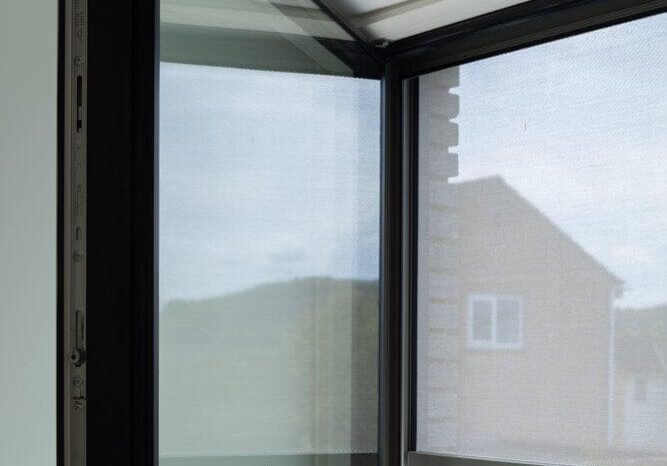
In comparison to awnings, the special weave of the fabric allows plenty of light into a room and occupants can still watch the world go by while keeping cool.
However, awnings are still a great choice if you also want to create a shaded seating area. We’ve also used them to provide shading to windows where installing an external blind is not possible due to a lack of fixing grounds.
Talk to us
Kensington Blinds has a wealth of experience working with architects and designers and installing blinds for over 40 years.
Our experts are always happy to talk you through how external blinds work and provide you with a quote. You can contact us via an email address or call us anytime.
Related Content
External Blinds Fabric Guide

Garden Room, Veranda, Pergola or Awning: What’s Actually the Difference?
