
How Can I Stop Overheating In My New Extension?
Quick Answer: Stop overheating by blocking sun before it hits the glass (with external shading such as blinds/awnings or fixed shading), then add good cross-ventilation and, if you’re buying new glass, choose solar-control low-g glazing. Internal blinds help with glare, not heat. If your designer only checked the whole house, ask for a room-by-room check of the extension.
It’s no surprise that glass box extensions or those with large glass doors continue to be popular.
Not only do they bring the garden into the home and beautifully accommodate kitchens and living rooms but they can transform the rest of the home from being dark and dingy to light and airy.
However, many people don’t realise that so much glass can create a greenhouse effect, especially if the room is south facing, making it uncomfortably stuffy and hot for residents.
Part O building regulations
Any homes built after June 2022 were subject to updated Part O building regulations to tackle climate change, where we’re experiencing longer and more frequent and intense heatwaves.
Although extensions or conservatories added to a building pre-dating June 2022 aren’t regulated under Part O, it’s still hugely important to mitigate overheating risks.
Why do extensions often overheat?
When designing a new extension, architects and energy consultants typically build a whole-home thermal model and test with typical summer weather simulations to see how many hours rooms spend above ‘comfort limits’ – the temperature thresholds a design is only allowed to exceed for a small fraction of time (typically 3% of occupied hours).
Because thermal modelling is often done at a whole house or averaged zone level, a cool main house can mask a small high-gain zone like a glass kitchen/diner or garden room – and the project still ‘passes’ the required comfort level.
In addition, lightweight finishes typically used for extensions – including plasterboard, timber, laminate or vinyl floors, kitchen units etc – absorb and store very little heat. This means your room can heat up very quickly in summer (but also cool down very quickly in shade).
Ask your designer to treat the extension as its own ‘zone’ when thermal modelling and test to see whether it exceeds comfort limits. If it does, you may need to consider cooling strategies.
What about cross-ventilation?
Cross-ventilation is the flow of fresh air through a room or home – entering via one opening and exiting through another on a different side or at a different height. It’s driven by wind pressure and the stack effect (warm air rising), and is especially effective when there’s a breeze or when outdoor air is cooler than indoors (eg evenings and nights).
Incorporating cross ventilation in your extension will not fix an overheating problem but can mitigate it – you’ll likely still need another solution.
The best solution to overheating
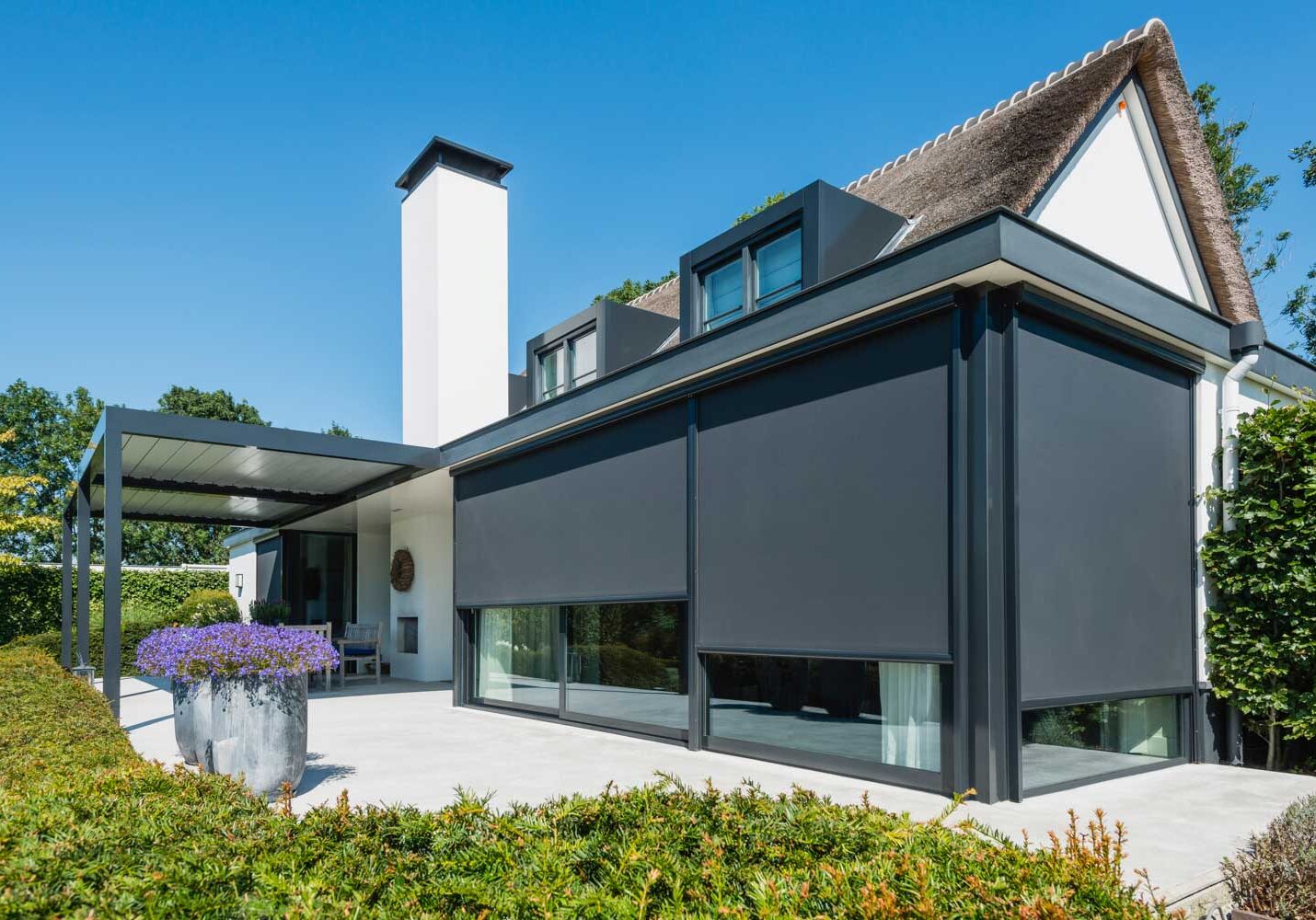
Architects in the UK are now adding external blinds to the integral design of homes to stop overheating happening in the first place.
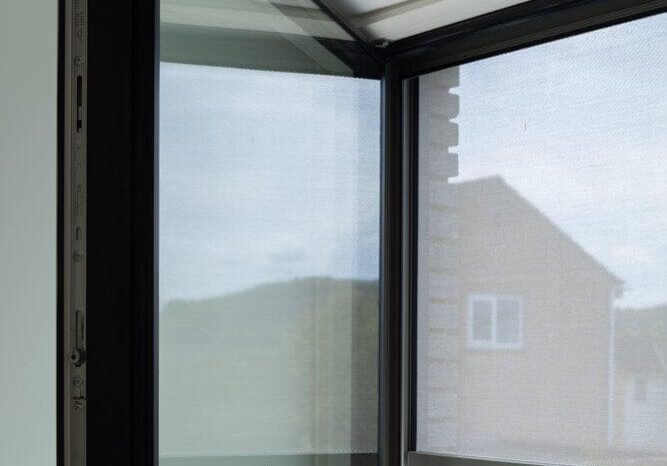
Whilst blocking 90 per cent of solar glare, external blinds allow residents to continue to enjoy views to the garden thanks to the special weave of the fabric. They’re also easy to maintain and can be fitted with sensors and automated to raise and lower automatically depending on weather conditions or the time of day.
Once installed, external blinds can reduce the temperature by an average of five degrees Celsius although anecdotally the temperature drop is more dramatic, reaching seven degrees Celsius or more in some of our case studies.
Passive shading is the future
As the world becomes more conscious of climate change, there has been a significant shift in how we build homes.
The Passivhaus movement has been gaining traction since the 1990s while the UK will soon begin to transition to The Future Homes Standard (FHS), a series of regulations focusing on improving energy efficiency and reducing new build carbon emissions by 75-80 per cent.
What about other shading options?
Other options to stop your extension overheating include awnings frequently seen in homes in Mediterranean climates.
Also popular in hot countries are louvres and shutters which are angled slats fixed or hung outside windows. They allow the air to circulate while the slats stop the sun’s rays coming into a room.
Extensions are sometimes built with triple glazing too to help keep residents warm in the winter, though glazing won’t stop the sun from overheating the extension.
The G-value which measures how much sun passes through the glass is lower than double glazing but still only reduces the solar glare by 40 to 50 per cent and is therefore not as effective as external blinds with its much lower G-value.
A sustainable choice
For a long time, air-conditioning units were seen as the only choice for overheating and while they remain popular in very hot climates, they are not generally necessary in the UK.
Air conditioning units are expensive to run and maintain, increasing summer energy bills by a significant amount depending on how often you run them.
In addition, they are very damaging to the planet, accounting for three per cent of global greenhouse gas emissions, a figure set to rise as our planet warms.
External blinds, on the other hand, use very little energy to lower and raise and can also act as an extra barrier for heat loss in the winter.
They are easy to use and can be controlled through a smartphone or home automation system or can be fitted with sensors to lower the blinds when the room reaches an optimum temperature.
What should I do then?
If you’re planning a glass-heavy home extension, the simplest way to keep it comfortable is to stop the sun before it gets in. Prioritise external shading (blinds, awnings or a fixed canopy/overhang - don’t forget rooflights), then add cross-ventilation for evening and night purging, and if you’re buying new glass, choose solar-control, low-g glazing.
Ask your designer to model the extension as its own zone, not just the whole house, so any risk shows up - and re-test with shading and ventilation included. Internal blinds are great for glare and privacy, but they sit inside the heat, so they won’t fix overheating alone. With these basics in place, most UK extensions won’t need air-conditioning.
Speak to the experts
Kensington Blinds have over 40 years’ experience of fitting external blinds to homes including modern extensions and outdoor kitchens which you can read about in our case studies.
Our external blinds come in a variety of designs and colours to match your exact specifications and can be fitted over windows and doors and skylights and roofs and corner windows and doors.
If you’d like to find out more or enquire about a quote, contact us.
Related Content
External Blinds Fabric Guide

Garden Room, Veranda, Pergola or Awning: What’s Actually the Difference?
